
Raptor Evolution
EstotyRole Playing
4.5925.00 Reviews
- Version
- 1.0.29
- Installs
- 5.00M
- Age Rating
- Teen
Screenshots
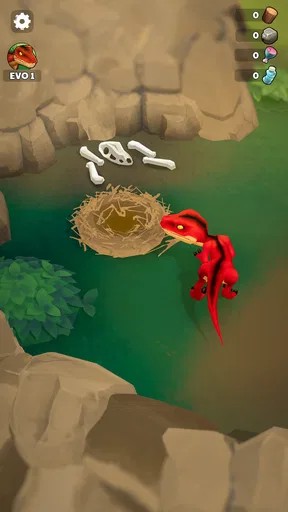
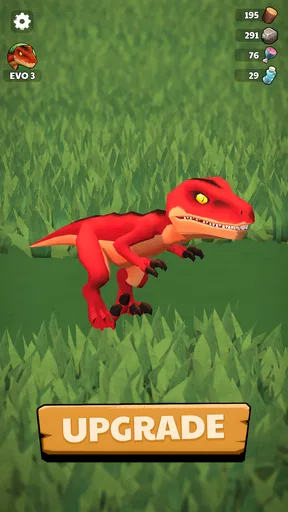
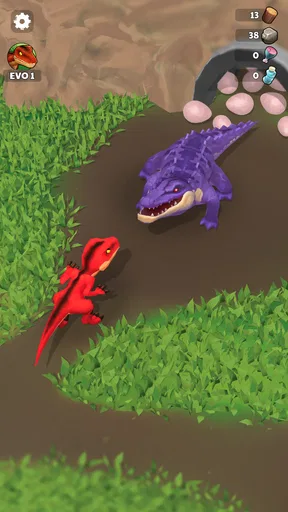
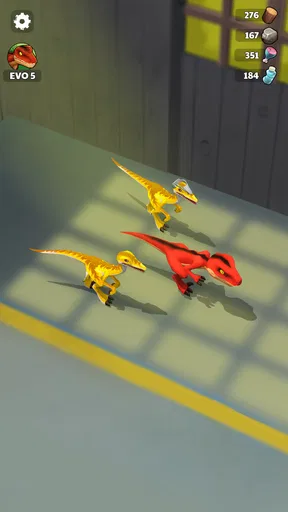
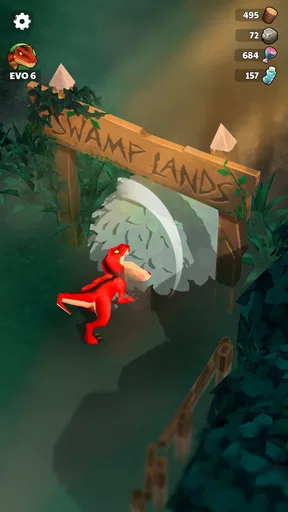
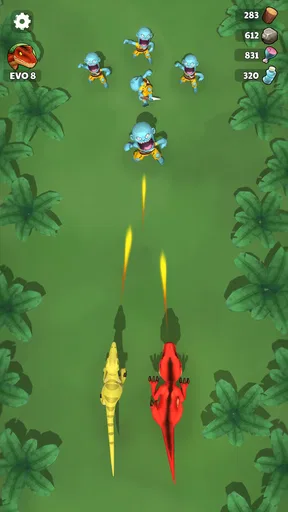
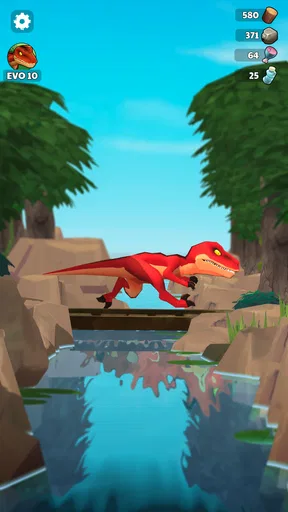

Our Review of Raptor Evolution
 Analysis by Appyee
I approached Raptor Evolution as a role-playing game first, but its post-apocalyptic dinosaur setting quickly made it feel different from the usual fantasy quest. Instead of beginning with a human hero and familiar weapons, it puts the focus on a powerful raptor trying to survive in a damaged world. That simple change affects how I read the action, how I think about progression, and even who is likely to enjoy the experience.
My overall impression is positive, especially if you want a free mobile game that can be picked up in short sessions and still gives you a sense of growth. The game is not a quiet, story-heavy role-playing adventure. Its appeal comes more from controlling a mighty creature, dealing with danger, and steadily becoming more capable. I also found that the dinosaur theme does more than decorate the interface: it gives the game a clear identity in a category crowded with interchangeable heroes and fantasy settings.
Estoty developed the game, and it has already attracted a sizeable mobile audience, with over five million installs and an average rating of 4.5 from around sixty-nine thousand ratings. Those figures suggest that the basic concept connects with many players, although popularity alone does not guarantee that its pacing or controls will suit everyone. I would recommend trying it with realistic expectations: this is best viewed as an accessible creature-focused RPG, not as a deep console-style survival simulation.
How the game reads and guides you through its world
I find the game’s strongest guide is its simple point of view: I am following a raptor through a damaged world, not juggling a large cast or a maze of unfamiliar roles. That makes it easier to return after a break, because I can reorient myself around the creature and its immediate situation. I’ll look next at how that clear premise meets the practical demands of touch play.
A clear premise with an immediately recognizable character
The strongest readability choice is the central idea. You are not asked to remember a large cast of names before understanding what you are doing. You play as a raptor in a ruined world, and that premise is easy to grasp from the first glance. For players who find dense fantasy interfaces tiring, this direct setup is useful because the main fantasy is visible rather than hidden behind layers of lore.
I also think the creature perspective helps the game stand out during a crowded app-library search. Many role-playing games rely on similar portraits, armor screens, and magical terminology. Here, the dinosaur gives the experience a stronger visual anchor. Even before learning every part of the progression system, I understood the basic motivation: make the raptor stronger and keep moving through a hostile environment.
That clarity matters for younger players within the Teen rating as well as for adults who do not want to study a manual before playing. The content rating is Teen, so I would still check whether the tone is appropriate for a particular player, but the premise itself is easy to communicate. It does not require specialist knowledge of role-playing games to understand the appeal.
Navigation is approachable, but attention still matters
In my experience, the most comfortable way to approach a game like this is to learn one screen at a time rather than tap through every menu immediately. I first concentrated on the active play area, then looked at progression and equipment-related choices when I had a reason to use them. That workflow reduces the chance of spending more time reading icons than actually playing.
The game’s visual identity makes the important idea easy to remember, but mobile RPG interfaces can still become busy when several rewards, upgrades, and prompts appear together. Players with difficulty distinguishing small symbols may need to pause and confirm what each control means. I would not treat rapid tapping as the best way to learn the game. A slower first session is more useful because it lets you identify which actions are essential and which screens can wait.
One practical tip is to avoid making every upgrade decision while distracted. If I were playing during a commute or while waiting in a queue, I would complete a short activity first and review progression afterward. That separates moment-to-moment play from resource decisions and makes it less likely that I will spend something simply because a notification appeared. This is a small habit, but it makes the experience feel more deliberate.
What the role-playing structure adds
The RPG label is important because the game is not only about watching a dinosaur run through a setting. The attraction is the ongoing feeling that the creature is developing. That gives ordinary play a purpose: a difficult encounter is not just an obstacle, but also a test of whether your current approach is working.
I enjoy that loop more than a purely endless action game because it gives me a reason to return. At the same time, players looking for a carefully written, branching narrative should be cautious. The dinosaur-survival premise is the star, while the progression structure is what keeps the sessions moving. If your favorite RPGs are built around dialogue choices, party relationships, or long story chapters, this may feel lighter than expected.
Reading the game without relying only on sound
For people who do not always play with audio, visual attention becomes especially important. I found it sensible to watch the play area and the visible state of the raptor rather than assume that sound will explain every important moment. This approach is also helpful in public places, where headphones may be inconvenient or where the player needs to keep the volume low.
There is a broader accessibility advantage in treating visual information as the primary guide: it lets the game fit more situations. A player can use it during a quiet break, in a shared room, or on public transport without making the surrounding environment part of the experience. The trade-off is that visual clutter becomes more significant. If several elements compete for attention, players who depend on strong visual separation may find longer sessions tiring.
Playing with different abilities and everyday constraints
I approach the game more comfortably when I match its pace to my hands, attention, and surroundings instead of trying to push through a long session. Small choices about where I play and when I review progression can make the experience less tiring, while also showing where a touch-first RPG may not fit. That everyday balance is the focus of the next section.
Motor demands and the value of a measured pace
Mobile role-playing games often look simple because they are designed for touchscreens, but repeated tapping and quick reactions can still create friction. I would not describe this game as automatically comfortable for every motor ability. A player who has limited precision, hand tremors, joint pain, or fatigue may prefer shorter sessions and a stable grip rather than trying to play continuously.
My most useful adjustment would be to keep the phone supported instead of holding it in midair. Resting the device on a table or using a stand can reduce strain and make taps more controlled. It also helps when the game becomes visually active, because I am less likely to shift my grip at the same time as I am trying to respond.
Another practical trade-off is session length. The game works better for me when I treat it as a series of small visits instead of one long marathon. That is not only a comfort choice; it also protects decision quality. After too much repetition, I am more likely to tap quickly, overlook a useful choice, or continue playing after the experience has stopped feeling enjoyable.
Players who require physical controls rather than touchscreen input should think carefully before choosing this game. A mobile touch interface can be convenient, but it may not provide the same tactile certainty as a controller. Someone who needs buttons with a clear physical response may find a controller-supported RPG or a different platform more suitable.
Sensory comfort is personal, not guaranteed
The setting has an intense survival mood, and that can be appealing or tiring depending on the player. A post-apocalyptic world naturally suggests danger and visual tension, so this is not the best choice for someone seeking a gentle, low-stimulation game. I would choose a calmer puzzle or management title when I want something relaxing rather than threatening.
For players sensitive to motion, flashes, or crowded scenes, the sensible approach is to begin with a short trial rather than commit to a long session. Keep the screen at a comfortable brightness, take breaks, and stop if the visual activity becomes uncomfortable. These are ordinary precautions, not evidence of a special accessibility mode, and I would not assume that the game offers one unless it is clearly presented in the current version.
Text readability also depends on the phone being used. On a larger screen, menus and labels are easier for me to inspect. On a smaller display, I need to hold the device closer and pay more attention to icons. Players with low vision may want to increase system-level display scaling if their device supports it, although that can sometimes change how much interface content fits on screen. The best setting is the one that reduces eye strain without making navigation awkward.
Situational access: where it fits well and where it does not
This is a convenient game for fragmented time. I can imagine playing it during a lunch break, while waiting for an appointment, or at home when I have only a few minutes to spare. The premise is easy to return to because I do not need to reconstruct a complicated conversation every time I open it. That makes it friendlier to irregular schedules than a long-form RPG that expects uninterrupted attention.
However, the same flexibility can create a temptation to play in unsuitable moments. I would not use it while walking, crossing a street, or doing any task that requires full awareness. A game built around a visually active creature and progression choices deserves attention, even if individual sessions are short. For someone who wants a background activity that can be ignored safely, an audio-first app or a slower idle experience would be a better option.
It also fits shared spaces reasonably well when played quietly. That makes it more adaptable than games whose enjoyment depends on loud music or dialogue. Still, silent play can change how clearly I notice events, so I prefer to use it in a place where I can look at the screen without rushing. The game is portable, but portability should not be confused with total hands-free convenience.
Who will enjoy the dinosaur-focused approach
I think the best audience is someone who likes character growth but wants a more unusual protagonist than a knight, wizard, or modern soldier. Dinosaur fans have an obvious reason to try it, but the appeal is wider: the raptor gives the player a strong visual identity and makes the survival setting feel more distinctive than a generic monster-fighting backdrop.
It is also a good fit for players who prefer a free starting point. The game can be downloaded without an upfront purchase, which lowers the risk of trying the concept. There are in-app purchases ranging from $0.99 to $99.99 per item, so I would decide in advance whether I want to spend anything. That is especially important for families or anyone who prefers games with tightly controlled entertainment budgets.
I would skip it if your priority is a purely peaceful experience, a richly branching story, or a game designed around physical buttons. I would also be cautious if you dislike repeated progression loops or feel uncomfortable with mobile purchases. The dinosaur theme may attract you, but it cannot compensate for a play style that does not match your preferences.
How it compares with familiar RPG alternatives
Compared with a conventional fantasy RPG, this game is easier to recognize and less dependent on familiar character roles. You do not begin by choosing between a standard collection of heroic archetypes; the raptor is the central identity from the start. That makes it a refreshing alternative for players who are tired of medieval settings.
Compared with a large, story-driven RPG, it is better suited to short, repeatable sessions. A big narrative game may offer more dialogue, world-building, and emotional investment, while this one is more immediately readable. I would choose the larger alternative for a weekend of immersive play and choose this game when I want a quick return to a clear survival fantasy.
Compared with an endless runner, the role-playing layer gives the dinosaur more long-term purpose. An endless runner may be easier to understand in a single minute, but it can feel more focused on score and reflexes. Here, the attraction is not only surviving the next moment; it is seeing the creature become more capable over time. The trade-off is that progression menus and decisions can add friction for someone who wants instant action.
Practical spending and device considerations
The free price makes experimentation straightforward, but I would not treat the game as automatically cost-free in the long term. The available purchase range is broad, and that changes how I would recommend it to different people. A casual adult can simply ignore optional spending or set a personal limit, while a parent should use the device’s purchase controls and discuss expectations before handing the game to a child.
The minimum operating-system requirement is Android 8.0, which keeps the entry point reasonably broad for compatible Android devices. Even so, compatibility is not the same as comfort. Screen size, touch responsiveness, battery condition, and available storage can all affect how pleasant a mobile game feels. I would test it on the device that will actually be used rather than assuming that a phone capable of installing it will provide the best experience.
The current version is 1.0.29, so I would keep the app updated through the normal store process when possible. Updates can matter for stability and usability, but I would still review any changed menus or purchase prompts after an update instead of assuming that familiar screens remain identical. That habit is useful for any evolving mobile game, especially when progression is involved.
Remaining barriers that affect inclusion
The biggest barrier is not the theme; it is the uncertainty that comes with a touch-first RPG. Players with motor limitations, low vision, sensory sensitivities, or a strong need for tactile controls may need to adapt their setup, shorten sessions, or choose another game. I can make the experience more comfortable with a stand, a larger display, lower brightness, and deliberate pacing, but those adjustments do not replace purpose-built accessibility options.
There is also a cognitive barrier for players who find layered progression systems overwhelming. The basic fantasy is clear, but deciding when to inspect upgrades, how to manage attention, and whether a purchase is worthwhile can become mentally demanding. My solution is to separate play from review: finish the immediate activity, then make progression decisions when calm. This prevents the game from turning every short break into a series of rushed choices.
Families should consider the Teen rating and the purchase structure together rather than looking at either one in isolation. The age label gives useful context about intended content, while the in-app price range makes device-level purchase safeguards sensible. I would not recommend leaving a young player to navigate those decisions without supervision.
My inclusive verdict
Raptor Evolution is most successful when its unusual protagonist and short-session RPG loop are allowed to do the work. I like that the game offers a clear identity instead of hiding behind a familiar fantasy template. The post-apocalyptic raptor concept is easy to understand, the free entry point encourages experimentation, and the progression gives the experience more staying power than a simple one-minute arcade diversion.
Its inclusiveness is practical rather than comprehensive. I can fit it into quiet breaks, play without making sound essential to the situation, and reduce physical strain by supporting the phone and taking regular pauses. Those choices make a real difference. Still, players who need highly adjustable controls, strong tactile feedback, or a low-stimulation presentation should test it carefully and may be happier with a game designed around those needs.
For me, the final recommendation is clear but selective: try it if you want a dinosaur-centered mobile RPG that is easy to recognize and flexible enough for irregular play. Approach it cautiously if you are sensitive to visual intensity, dislike touch controls, or want a deep narrative rather than creature progression. Estoty has created a distinctive free game with a broad potential audience, but its best match is the player who enjoys becoming stronger in a dangerous world and is comfortable shaping the experience through sensible pacing and personal device adjustments.
Verdict
Strengths of Raptor Evolution
- Fast-paced battles are easy to learn but remain engaging.
- Creature upgrades give each match a clear sense of progression.
- Colorful prehistoric visuals make the game appealing on mobile screens.
- Short rounds suit quick gaming sessions on the go.
- Different raptor abilities add variety to combat strategies.
Limitations of Raptor Evolution
- Progress can feel repetitive after extended play sessions.
- Some upgrades may require considerable grinding to unlock.
- On-screen controls can feel cramped on smaller phones.
- Frequent battles may drain the battery relatively quickly.
- The game may offer limited depth for experienced strategy players.
Other Releases by Estoty
View All
I Am Cat
Simulation4.5

Frost World - Snow Survival
Role Playing3.9

I Am Security
Role Playing4.6

I Am Monkey
Simulation4.7
Similar Picks in This Category
View All
Hair Dye
CrazyLabs LTD4.4

Monster High™ Beauty Salon
CrazyLabs LTD4.5

Bus Simulator - Bus Games 3D
Jima Apps4.4

Flight Pilot: 3D Simulator
Wildlife Studios4.1


Super Stylist Fashion Makeover
CrazyLabs LTD4.4
Frequently Asked Questions
What is Raptor Evolution about?
Raptor Evolution is an action-focused game centered on controlling and developing a powerful raptor. Players typically progress through encounters, challenges, and upgrades while improving the creature’s abilities. The main appeal is the combination of fast gameplay, dinosaur-themed presentation, and gradual evolution. Before downloading, users should check the current store description because available modes, objectives, and progression systems may vary between versions and updates.
Is Raptor Evolution free to download and play?
Raptor Evolution may be available as a free download, but players should review the store listing carefully for optional purchases, advertising, or other monetization features. Free access does not always mean that every upgrade or item is included without payment. If you are trying to avoid unexpected charges, use device purchase restrictions and confirm whether the game offers in-app purchases before beginning.
Does Raptor Evolution require an internet connection?
The connection requirements can depend on the version and the feature being used. Some gameplay elements may work offline, while advertisements, cloud saving, online events, updates, or account-related functions may require internet access. It is best to launch the game once while connected, review its permissions and settings, and test whether the core gameplay remains available when your device is offline.
Is Raptor Evolution suitable for children?
Raptor Evolution may appeal to younger players because of its dinosaur theme, but suitability depends on the game’s age rating, intensity of combat, advertising, and in-app purchase options. Parents should check the official rating for their region and review the content before allowing children to play. Enabling parental controls is also recommended if the game includes purchases or external links.
What devices are compatible with Raptor Evolution?
Compatibility depends on the operating system, hardware requirements, and the version published for Android or iOS. Older phones and tablets may experience slower performance, longer loading times, or limited access to visual effects. Before downloading, compare the app’s store requirements with your device’s operating-system version and available storage. Keeping sufficient free space can also help prevent installation or update problems.
Play our best games!


